

















A repeat order for long-term factory power
A Russian customer who has purchased gas generator sets from GOODWIND on several occasions has placed another order: a sound-attenuated unit with a specified continuous output of 200 kW. Its intended destination is the customer's outlying factory, where the power system needs to support production around the clock.
The new unit is planned to operate in parallel with gas generators bought previously from GOODWIND. The project therefore connects a new machine with an existing generating system. Its operating role, controls and site connections need to be considered together with the equipment already at the factory.
This repeat business gives the order a particular meaning for our team. Each additional purchase carries the customer's expectation that the next machine will receive the same care as the first.
Every repeat order brings more than business; it brings recognition and trust. At GOODWIND, that trust matters more than the profit from a single order. Exceptional passion drives us to create exceptional products.
For this project, that commitment is expressed through a specific combination of gas engine, alternator, controls and acoustic enclosure, selected for the customer's long-term power requirements.
The 200 kW gas generator configuration
The ordered unit combines a Weichai WP13D317E300NG gas engine, a Leroy-Somer TAL-A46-D alternator and a Deep Sea Electronics DSE 8620 controller. The complete set is housed in a sound-attenuated canopy.
| Project item | Specified configuration or intended use |
|---|---|
| Customer location | Russia |
| Electrical output | 200 kW specified continuous power |
| Engine | Weichai WP13D317E300NG gas engine |
| Alternator | Leroy-Somer TAL-A46-D |
| Controller | Deep Sea Electronics DSE 8620 |
| Enclosure | Sound-attenuated canopy |
| Power application | Long-term primary supply for an outlying factory |
| Planned operating arrangement | Parallel operation with previously purchased gas generator sets |
| Site energy plan | Support for the customer's combined heat and power application |
Full model references are important when extending an existing installation. Engine variants, electrical ratings and control interfaces need to match the approved order documents. Weichai's WP13NG engine information is a component reference; the complete generator's agreed electrical output remains the basis for the project.
Planning for round-the-clock primary supply
The customer intends to use the generating system as a long-term primary power source, with electricity required 24 hours a day. This operating requirement places attention on the complete system: available power, gas supply, cooling, maintenance access and the way the individual sets work together.
The 200 kW figure identifies the specified output of the new unit. It does not state the factory's total load or the combined capacity of the existing generating plant. Those figures depend on the number and ratings of the other sets and the operating arrangement at the site.
For a factory owner, the useful planning document is a load profile: which equipment runs continuously, which loads cycle, and which machines impose significant starting demands. That information helps establish how many sets need to be online during each production period and how operating changes should be managed.
Round-the-clock demand also needs a maintenance plan. Service intervals, spare parts and the capacity available while a unit is stopped belong in that discussion. The new order supports the customer's continuous-supply objective; the final site operating plan determines how production demand and scheduled servicing are coordinated.
Site preparation is another part of that plan. Before delivery, the owner and installation team should establish the foundation and clearances, the gas connection information, cable routes, exhaust arrangement and responsibilities for commissioning. Keeping these interfaces visible helps connect the factory-built equipment with the work to be completed at the destination.
Adding the new unit to the existing system
The planned parallel connection is a central part of this order. Before a generator is connected to an energised bus, its electrical output must be brought into the required relationship with the system. Once connected, the controls and switchgear need to manage the contribution of each unit within the agreed operating limits.
For this project, the DSE 8620 is the specified controller. The complete paralleling arrangement also involves the existing units' controls, governor and voltage-regulator interfaces, switching equipment, protection and site commissioning. The controller, interfaces and switching equipment need to be coordinated as a complete system.
The intended operating mode is parallel generation with the customer's existing gas sets. Site electrical drawings should distinguish this arrangement from any utility interconnection and identify the switching and protection responsibilities.
For buyers extending a plant, sharing information about the existing generators early is useful: controller models, electrical ratings, operating modes and available drawings. These details help the supplier and site team define the integration work before the new set arrives.
Supporting the customer's combined heat and power plan
The new gas generator also supports the customer's intention to use combined heat and power, commonly called CHP or cogeneration, at the factory. The purpose is to make useful energy available as both electricity and heat, rather than evaluating the equipment solely by its electrical output.
In an engine-based CHP system, heat-recovery equipment captures usable heat from the engine system and transfers it to a thermal load. The US EPA's explanation of CHP describes this general principle. The actual application needs an identified heat user, suitable operating temperatures and a heat-recovery arrangement matched to the generating equipment.
For a factory, the important question is when heat is needed relative to electricity. Recoverable heat only contributes to useful energy savings when the site can use it. The thermal demand profile, return temperatures, seasonal changes and control arrangement therefore belong alongside the electrical load assessment.
This order supports the customer's on-site CHP application. The heat-recovery supply boundary and final thermal connections are part of the project engineering. Useful heat output and overall efficiency should be established for the selected recovery equipment and operating conditions, including how much of the available heat the factory can use.
A sound-attenuated canopy with service access
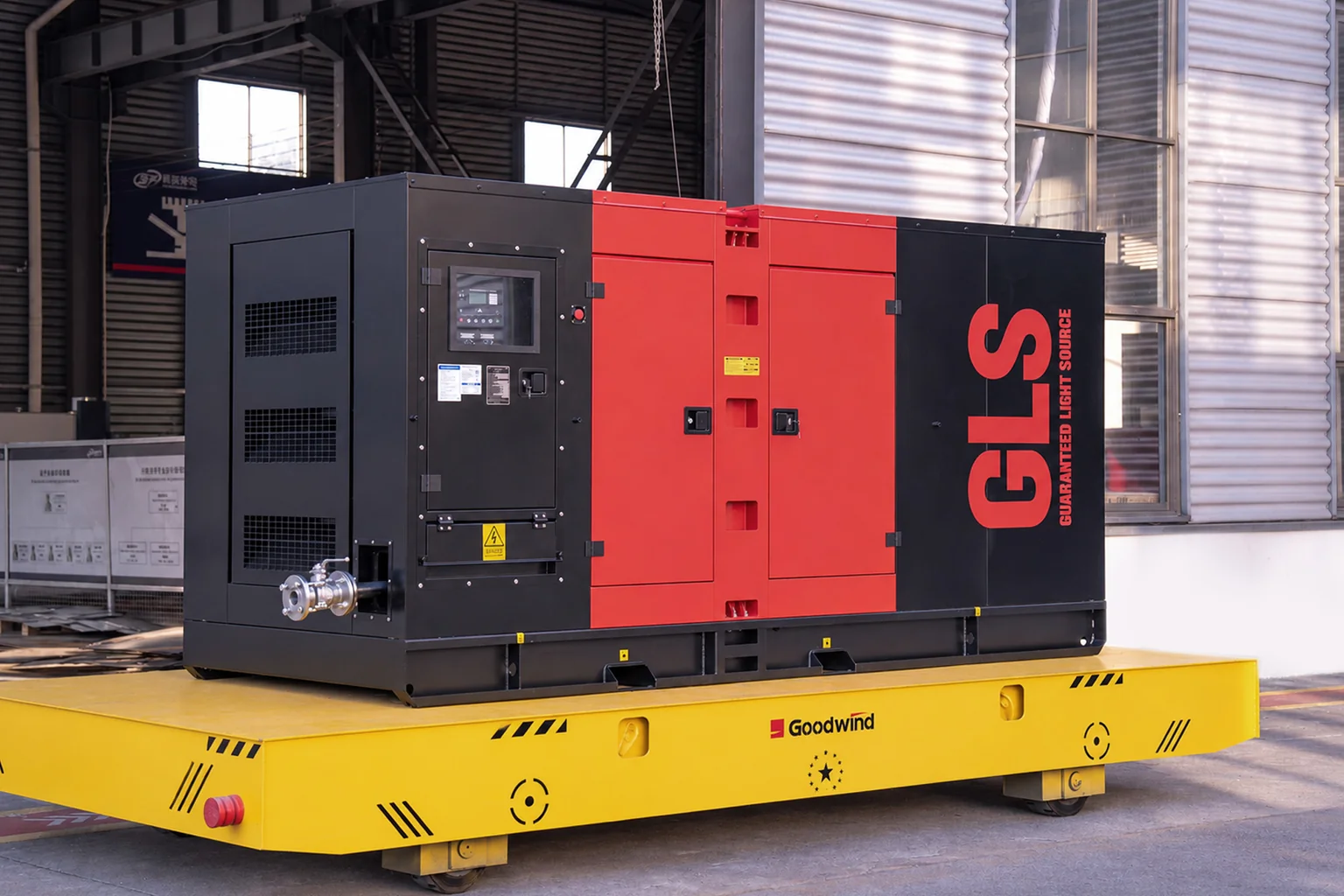
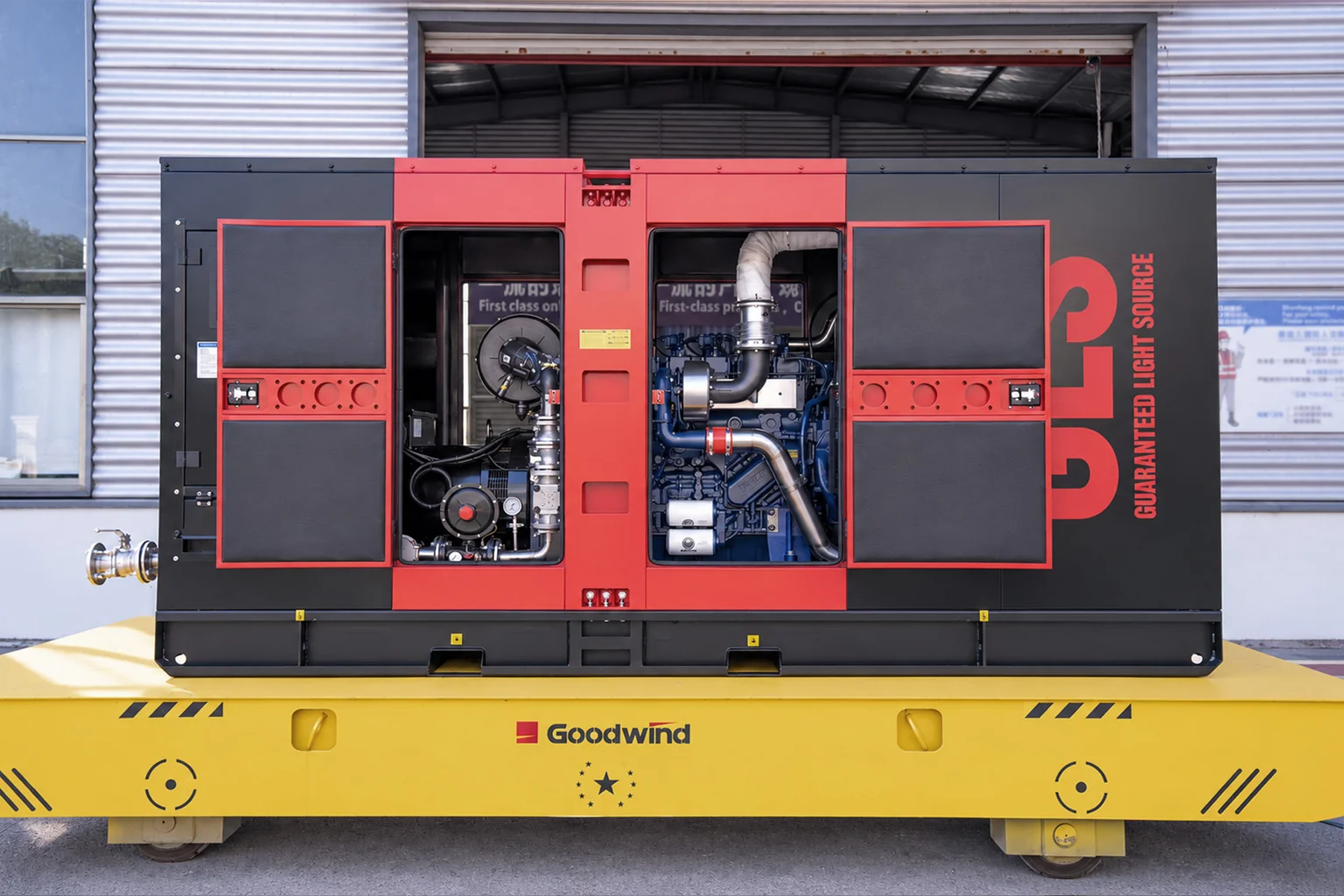
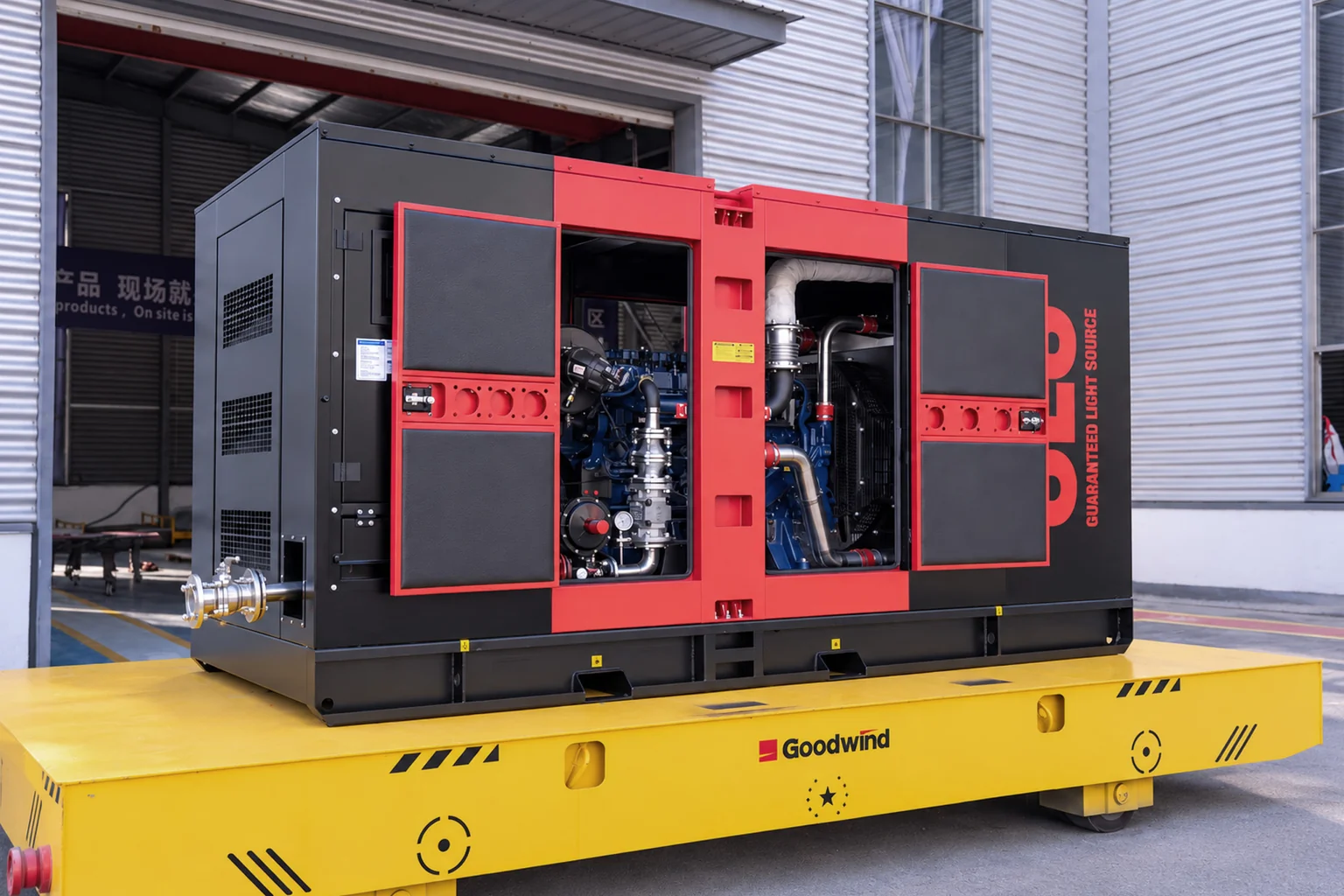
The red and black canopy shown in the factory photographs forms part of the supplied generator configuration. It encloses the generating equipment and is intended to reduce operating noise while providing access through the side doors.
The open-door views are useful because enclosure design also affects daily work. Operators need to reach inspection and service points, while the installation needs adequate space around the doors. A practical site arrangement considers both the closed unit during operation and the access required when it is being maintained.
Acoustic treatment must also work with the cooling and ventilation arrangement. Blocking an air path to reduce sound can create another problem, so the complete installation needs to respect the equipment's airflow and exhaust requirements.
The customer seeks a low-noise installation suited to the factory environment. Actual sound levels at the site depend on operating load, measurement distance, surrounding structures and background sound. Where sound limits apply, define the measurement conditions and acceptance criterion in the project specification.
Assessing gas costs over long operating hours
The customer's access to competitively priced gas is an important reason for choosing gas generation. When a factory requires power every day, fuel expenditure becomes a recurring operating cost that deserves attention alongside the initial equipment purchase.
The useful comparison is based on the gas available at the actual site: its delivered price, composition, heating value and supply conditions, together with the generator's consumption at the expected electrical loads. A national picture of gas availability cannot replace that local calculation.
Where recovered heat displaces a separate source of useful heat, the CHP arrangement can add another part to the economic assessment. The calculation should account for the heat actually used, heat-recovery equipment, maintenance and operating costs. Fuel savings and emissions benefits depend on the chosen comparison and should be evaluated on the same energy basis.
For this customer, the combination of gas availability, long operating hours and a planned heat-use application provides the context for the new purchase. Evaluating electricity and useful heat together gives an owner a more complete view of running costs than considering the generator's purchase price alone.
Discuss a similar factory power project
This repeat order brings together a 200 kW gas generating set, a sound-attenuated canopy and planned integration with the customer's existing equipment. The factory photographs document the machine described here; the parallel operation and on-site heat use are the intended next stage of the project.
For a similar application, tell GOODWIND the required electrical load, daily operating hours, voltage and frequency, site conditions and available gas information. If the new set must work with existing generators, include their ratings and controller details. For CHP, add the intended heat use and its operating temperatures and schedule.
Explore our gas generator range and manufacturing and quality information, or contact GOODWIND to discuss your factory power requirements.